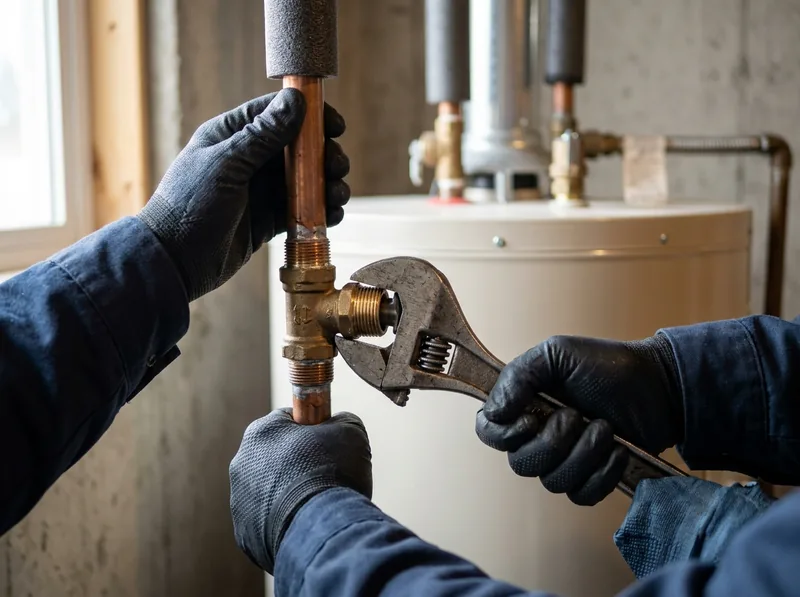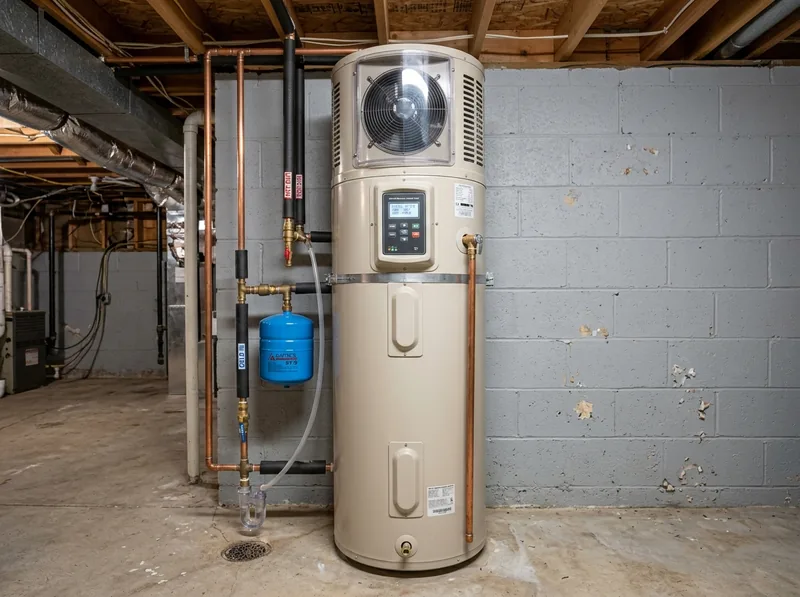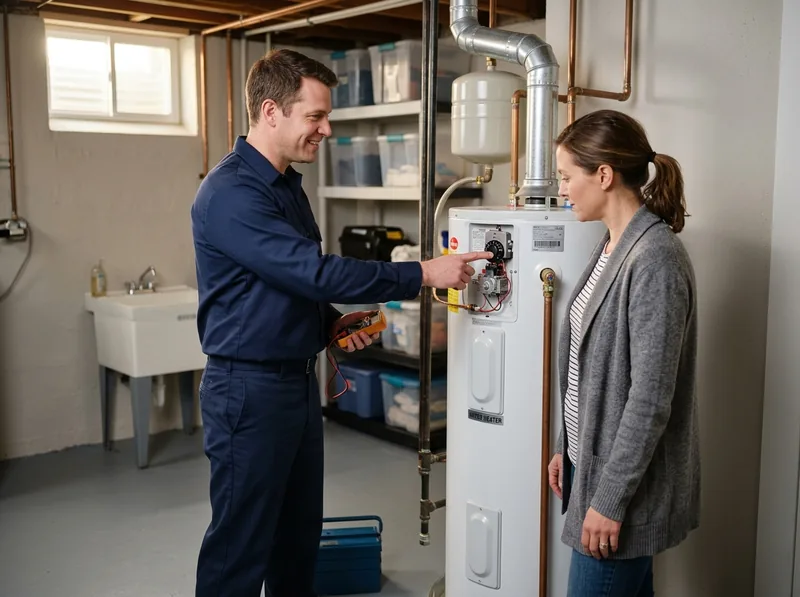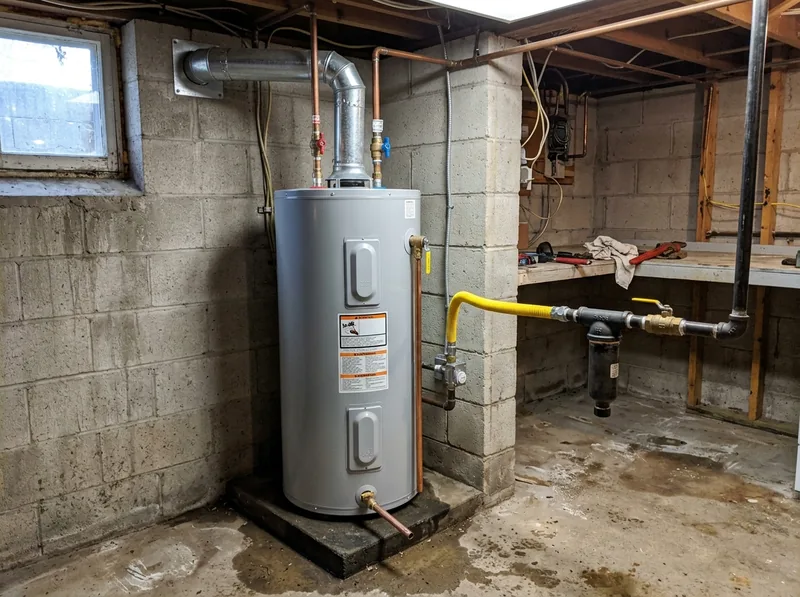
Sediment taking up tank space, a failed lower heating element on electric units, a thermostat set too low and a broken dip tube are the most common causes. Colder winter water, a tank that's too small for your household and a failing mixing valve on boiler-fed systems can cause it too. If hot water ran out suddenly, look for a failed part. If it's been getting worse for months, sediment or demand is the likely cause.
7 common causes
1. A failed lower heating element (electric)
Electric tanks have two elements. If the lower one fails, only the top of the tank heats, so you get a short burst of hot water, then lukewarm. This is one of the most common electric water heater calls. See electric water heater repair.
2. Sediment buildup
Sediment takes up space at the bottom of the tank and insulates the water from the burner, slowing recovery. Popping or rumbling sounds are a giveaway. Our guide shows how to flush a water heater.
3. A broken dip tube
The dip tube carries incoming cold water to the bottom of the tank. If it cracks or breaks down, cold water mixes in at the top where hot water leaves. Small white plastic particles in faucet aerators or shower heads are a classic sign; the Portland Water Bureau and Family Handyman both note this. Dip tubes can be replaced.
4. Thermostat set too low
Many people turn the setting down to save energy and forget. Around 120°F is a common recommendation. Much lower, and the usable hot water drops noticeably.
5. Cold winter water
In Connecticut, incoming water is much colder in winter than in summer. The heater has to raise it further, which means less hot water and slower recovery from the same tank. If the problem only shows up in January, this may be all it is. If the tank was barely keeping up in summer, it may simply be too small.
6. The tank is too small
Household needs change: a new baby, a teen who takes long showers, a soaking tub. Tank water heaters are rated by their first-hour rating, printed on the EnergyGuide label, which tells you how much hot water they deliver in a busy hour. If yours can't match your morning routine, it's undersized.
7. Boiler-fed system issues
If hot water comes from the boiler, a scale-clogged tankless coil, a failing mixing (tempering) valve or a boiler aquastat set too low can all shorten the supply. See indirect and oil-fired water heater repair.
Quick diagnosis
| Pattern | Look at |
|---|---|
| Sudden change, electric heater | Lower element or thermostat |
| Gradual decline plus rumbling | Sediment |
| Plastic bits in aerators | Dip tube |
| Only in winter | Cold inlet water; tank size |
| Hot water from the boiler | Coil, mixing valve, aquastat |
| Tankless runs cold with multiple fixtures on | Flow limit or undersized unit |
What about tankless water heaters?
Tankless units don't "run out", but they can't keep up if demand exceeds their flow rate. The DOE notes that tankless output is typically limited to about 2 to 5 gallons per minute, so running two showers and a dishwasher at once can overwhelm one unit. Scale buildup reduces output too. See tankless water heater repair.
Repair or upsize?
Elements, thermostats and dip tubes are inexpensive repairs. But if your household has outgrown the tank, a larger tank, a high-recovery gas model or a tankless unit is the real fix. Our water heater replacement page compares the options. Need a diagnosis? Call us to be connected with a local pro through our water heater repair service in Connecticut.
Common questions
Why does my shower go cold after 5 minutes?
On an electric heater, a failed lower element is the most likely cause. On any tank, a broken dip tube or heavy sediment can also do it.
Should I turn up my water heater to get more hot water?
A modest increase can help, but higher settings raise the scald risk. Fixing the underlying cause or adding a mixing valve is safer.