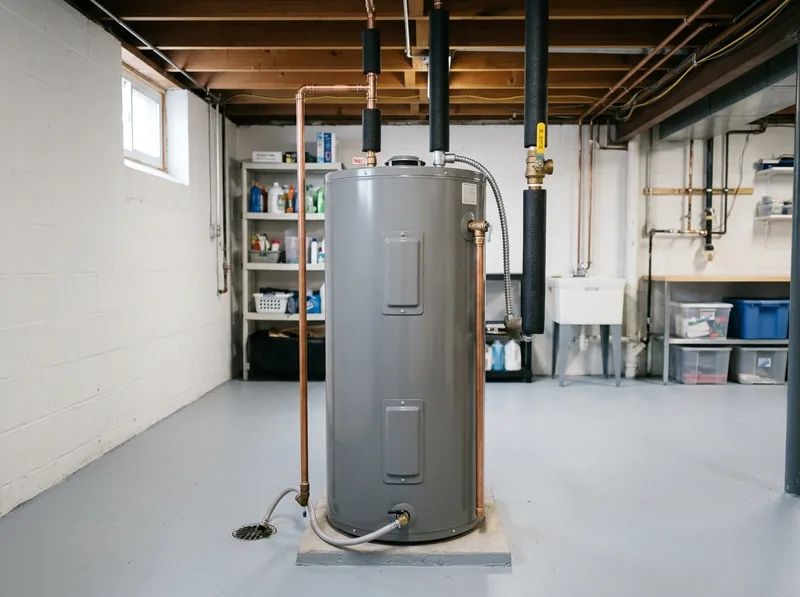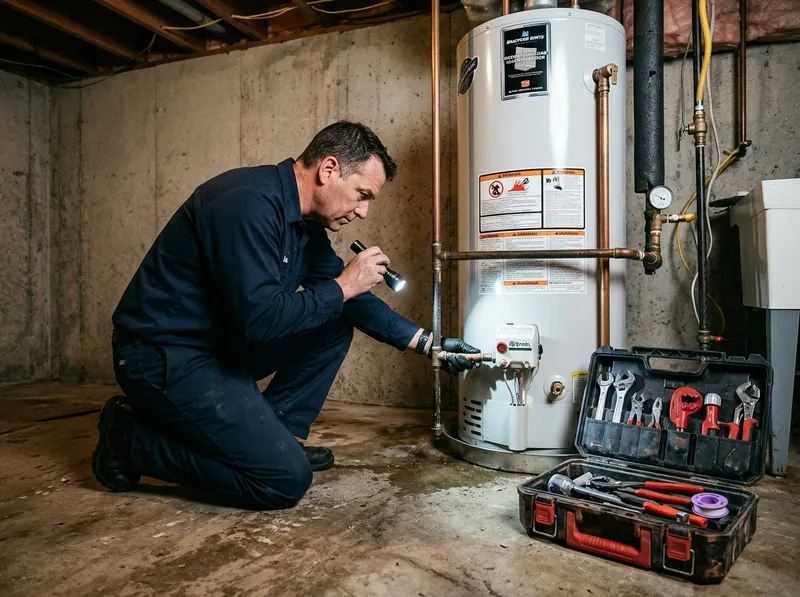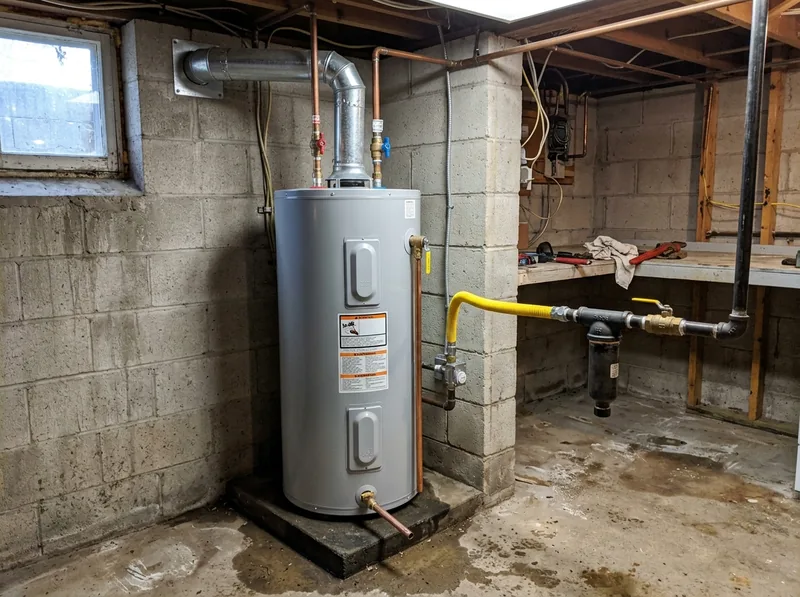
The most common causes are a worn or dirty thermocouple (or flame sensor), a clogged pilot orifice, and a dirty air intake screen or flame arrestor on newer sealed-combustion heaters. Drafts, venting problems, low propane and a failing gas control valve can also put the pilot out. Clean the area around the base and follow the relighting label once. If it goes out again, call a pro.
How the pilot and safety system work
On a standard gas water heater, a small pilot flame heats a thermocouple, or on some models a thermopile or flame sensor. That component tells the gas control valve that a flame is present. If it doesn't sense heat, the valve shuts off the gas as a safety measure. So when the pilot "won't stay lit", the safety system is usually doing its job because something is off.
Common causes
| Cause | Clues |
|---|---|
| Worn or dirty thermocouple or flame sensor | Pilot lights while you hold the button, then goes out soon after you release it |
| Dirty or clogged pilot orifice | Small, weak or yellow pilot flame instead of a steady blue one |
| Clogged air intake or flame arrestor (FVIR models) | Unit sits in a dusty laundry room or near lint; pilot fades or burner flame lifts |
| Drafts or venting problems | Outages on windy days, or when exhaust fans or the dryer run; soot near the draft hood |
| Gas supply problems | Low propane tank, a recently shut valve or other gas appliances misbehaving |
| Failing gas control valve | The thermocouple tests fine but the valve still won't hold |
| Tripped thermal cutoff on FVIR units | The unit won't relight at all; it may have sensed flammable vapors or overheating |
The dust and lint problem on newer heaters
Most gas water heaters made in recent decades are FVIR (flammable vapor ignition resistant) models. They draw combustion air through a flame arrestor and a filter or screen at the base. When that intake clogs with dust or lint, the flame starves for air. A. O. Smith's service bulletin on cleaning these parts notes that filter screens should be checked regularly, and that dusty areas such as laundry rooms may need monthly inspection. That makes this one of the most common causes of repeat pilot outages in basement laundry areas.
What you can safely check
- Clear the area. Keep storage, laundry and anything flammable away from the heater, and vacuum around the base and the air intake openings.
- Check the gas supply. Confirm other gas appliances work. Check the propane gauge if you're on propane.
- Look for drafts. Is a window open nearby? Does the outage happen when the dryer or a bath fan runs?
- Relight once, following the instructions on the unit's label exactly.
- If it goes out again, stop. Repeatedly relighting a pilot that won't hold isn't safe or effective. Call a technician.
Smell gas, see soot or hear a carbon monoxide alarm? Leave the house and call your gas utility or 911 from outside. Every home with gas appliances should have working CO alarms.
Venting issues in older Connecticut homes
In many older homes, the water heater vents into a masonry chimney. If the furnace or boiler was replaced with a high-efficiency unit that vents through the wall, the water heater can be left alone in an oversized chimney that doesn't draft well. Poor draft can starve or blow out the pilot and spill exhaust into the basement. This is common in older housing in places like Hartford, Waterbury and New Haven. A pro can test the draft and recommend a chimney liner or a power-vent heater.
Repair or replace?
A thermocouple, pilot assembly or flame arrestor cleaning is usually an inexpensive repair. A gas control valve costs more, and on a tank older than about 10 years, that money may be better spent on a new unit. Learn more on our gas water heater repair page, or call us to be connected with a local pro for water heater repair in CT.
Common questions
Can I replace a water heater thermocouple myself?
Some homeowners do, but it involves gas connections and must be done correctly. If you aren't experienced with gas appliances, have a technician do it.
Why does my pilot go out when the dryer runs?
A running dryer or exhaust fan can pull air out of the room and disturb the water heater's draft. Better combustion air supply or a venting change may be needed.