The temperature and pressure (T&P) relief valve opens when tank pressure or temperature gets too high. A slow drip usually means pressure from thermal expansion in a closed plumbing system, which a working expansion tank solves, or a worn valve. A sudden gush of very hot water means the tank overheated, often from a failed thermostat. Turn off the heater and call right away. Never cap or plug a relief valve.
What the T&P relief valve does
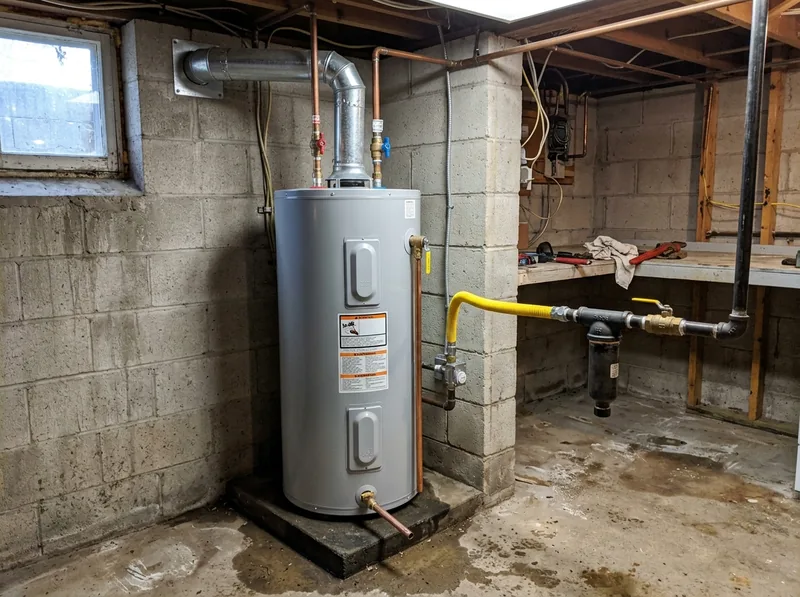
Every tank water heater has a temperature and pressure relief valve, usually near the top with a pipe running down the side. It's a safety device. If water in the tank gets too hot or the pressure climbs too high, the valve opens and lets water out before the tank is damaged. A. O. Smith notes the valve normally carries a 210°F temperature rating and a pressure rating no higher than the tank's certified working pressure, which is generally 150 psi.
Drip vs. discharge: what it tells you
| What you see | Likely cause | Urgency |
|---|---|---|
| Slow drip or weeping, often after hot water use | Thermal expansion in a closed system; high incoming pressure | Fix soon |
| Constant small drip | Worn or dirty valve seat, often after the valve was tested | Fix soon |
| Sudden, large discharge of very hot water | Overheating, typically a malfunctioning thermostat or gas control | Shut off the heater and call now |
Thermal expansion and closed systems
Water expands when it's heated. In older plumbing, that extra volume could push back into the street main. But many homes now have a check valve, backflow preventer or pressure-reducing valve on the main line, which creates a closed system. With nowhere to go, the pressure rises every time the heater runs, and the relief valve opens to let it out. Manufacturer bulletins identify this thermal expansion as a common reason for slow weeping from the T&P valve.
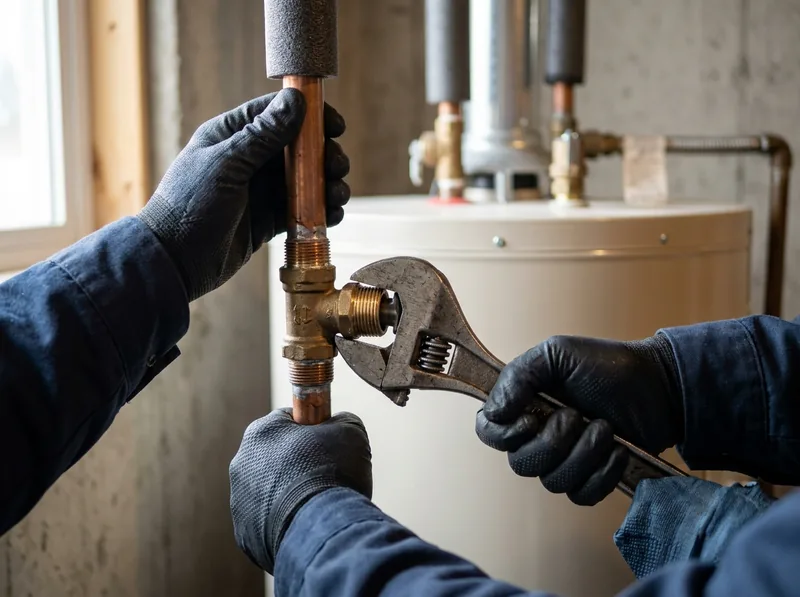
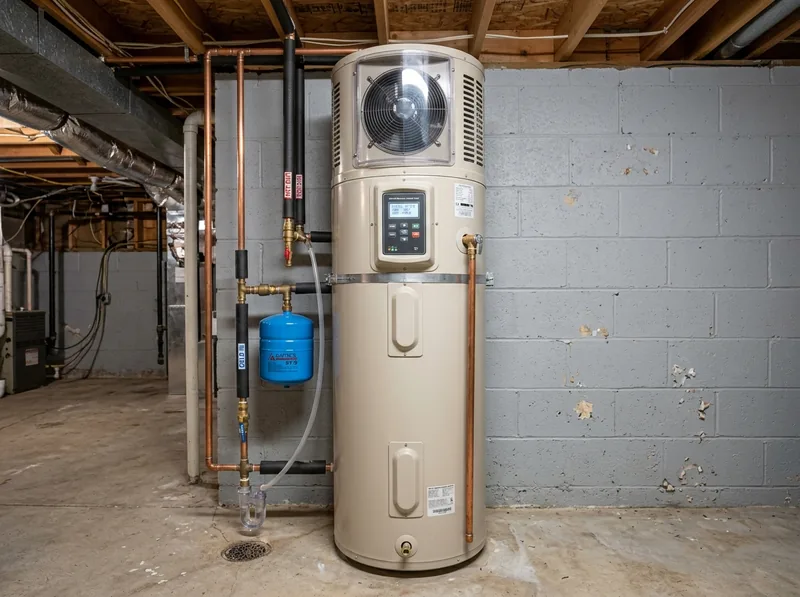
The standard fix is a thermal expansion tank, a small tank on the cold line that absorbs the extra volume. Its air charge should match your home's water pressure, and expansion tanks can fail over time, so an existing one may need checking or replacing too. A pro can also test the house pressure, since high street pressure can trigger the valve on its own.
What to do right now
- Check the discharge. Is it a slow drip or a stream of hot water? Be careful: discharge water can be scalding.
- For heavy hot discharge: turn the breaker off or set the gas control to off, then call. See our emergency water heater repair steps.
- For a slow drip: put a bucket under the discharge pipe and schedule a service visit.
- Don't plug, cap or remove the valve. It's the device that keeps the tank from failing dangerously.
Testing the valve
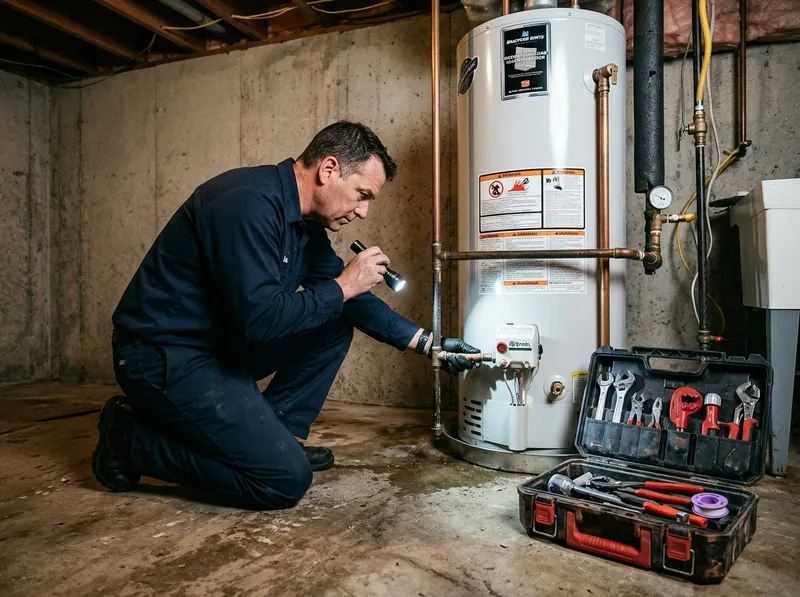
Many manufacturers recommend lifting the valve's test lever periodically to make sure it opens and flushes debris from the seat. Read the label on your heater. Be aware that an old valve that hasn't moved in years may not reseat afterward and could start dripping. Have a replacement plan in place before testing a valve on an older unit.
Is it the valve or the tank?
Water on the floor isn't always from the relief valve. Check the discharge pipe, then the fittings on top and the drain valve. If water is coming from under the tank with everything above it dry, the tank may be leaking. Our water heater leak repair page walks through how to tell. For anything you can't pin down, we connect homeowners with local pros for water heater repair throughout Connecticut.
Common questions
Is a dripping water heater relief valve dangerous?
A slow drip isn't an emergency, but it's a sign of excess pressure or a worn valve and should be fixed. A large discharge of very hot water needs immediate attention.
Do I need an expansion tank on my water heater?
If your home has a check valve, backflow preventer or pressure-reducing valve that makes it a closed system, an expansion tank is typically needed. Local code and the water heater manufacturer's instructions apply.