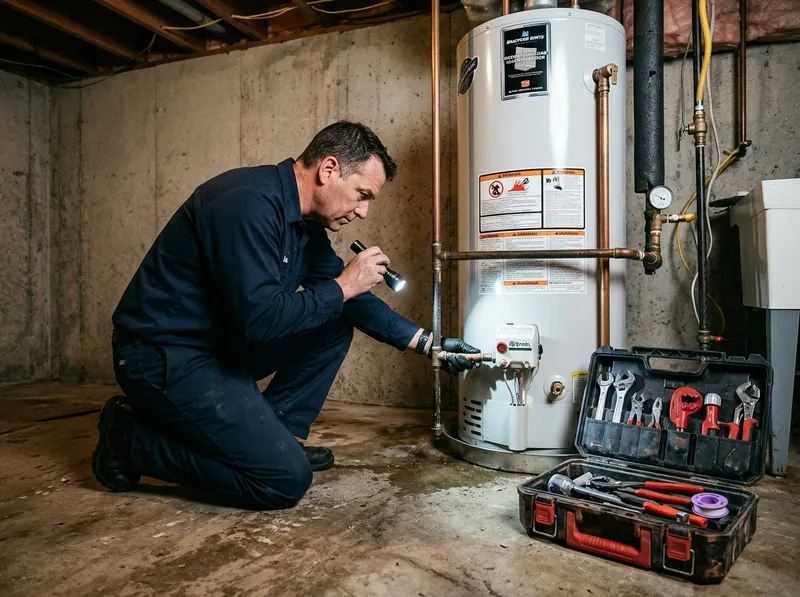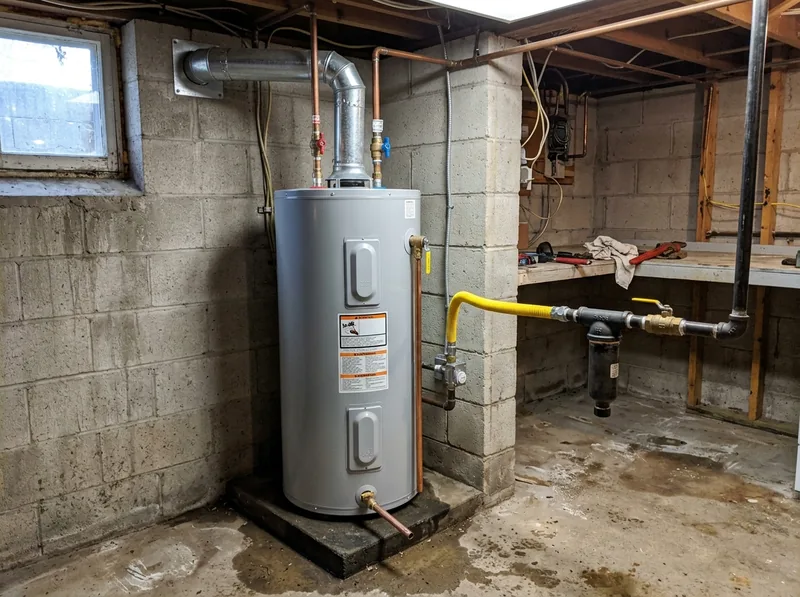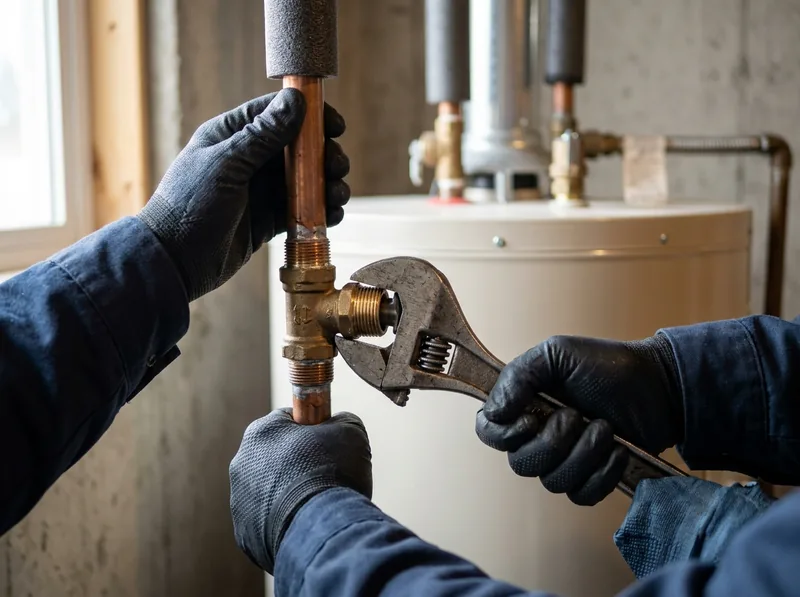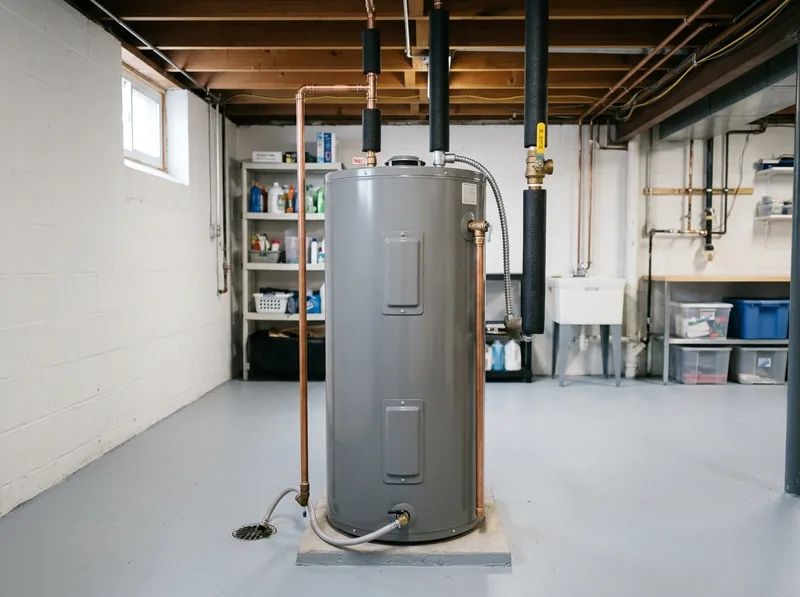
The U.S. Department of Energy puts storage tank water heaters at about 10 to 15 years and tankless water heaters at about 20 years. In practice, hard or well water, high usage and skipped maintenance can shorten that. A leaking tank, rusty hot water or repeated repairs on a unit past 10 years are the clearest signs it's time to replace.
Typical lifespan by type
| Type | Typical life | What shortens it |
|---|---|---|
| Gas or electric storage tank | About 10 to 15 years (DOE) | Sediment, depleted anode rod, high water pressure |
| Tankless (on-demand) | About 20 years (DOE) | Skipped descaling, hard water |
| Indirect-fired tank | Often long-lived, especially stainless steel models | Boiler and control issues more than the tank |
| Heat pump water heater | Similar tank life, plus a compressor and fan | Clogged air filter, poor location |
These are averages. Some tanks fail at eight years and others run for twenty.
How to find your water heater's age
Look at the rating label on the side of the tank. Manufacturers encode the manufacture date in the serial number, often as a letter or digits for the month and year. The format varies by brand, so search the manufacturer's website for "serial number date code" plus the brand name. Some labels also show the date outright. If the unit came with the house, a home inspection report may list its age too.
Signs your water heater is near the end
- Water leaking from the tank body. A corroded tank can't be repaired. See water heater leak repair to tell a tank leak from a fitting leak.
- Rusty hot water. If only the hot water is discolored, the tank may be corroding inside. Our guide to rusty hot water explains how to check.
- Loud rumbling that a flush doesn't fix. Read why water heaters make noise.
- Repeated repairs. The second or third repair on a 10-year-old unit is usually a sign to stop investing in it.
- Not enough hot water anymore. See why hot water runs out fast.
What helps a water heater last longer
- Flush the tank yearly, or more often on well water. Here's how to flush a water heater.
- Check the anode rod every few years and replace it before it's fully consumed.
- Control pressure. Plumbing codes generally call for a pressure-reducing valve when incoming pressure is above 80 psi, and closed systems need a working thermal expansion tank.
- Descale tankless units about once a year.
- Keep the temperature reasonable. Around 120°F is a common recommendation that balances comfort, energy use and scald risk.
Plan the replacement before it fails
Replacing a water heater on your own schedule beats replacing it after it floods the basement. Planning ahead lets you compare options. In Connecticut, an ENERGY STAR heat pump water heater can qualify for an Energize CT rebate in 2026. See our guide to heat pump water heater rebates in Connecticut. For gas homes, a tankless unit is another option.
Permits and licensing in Connecticut
Most Connecticut towns require a permit to replace a water heater. In Connecticut, plumbing work is licensed by the Department of Consumer Protection. Unlimited plumbing contractors hold a P-1 license, and P-2 journeypersons work under a licensed contractor. You can verify a license through the DCP before work begins.
When it's time, our water heater replacement page explains the process, and one call connects you with a local pro through our Connecticut water heater repair service.
Common questions
Should I replace a 15-year-old water heater that still works?
Many homeowners do, because a tank that age is past its typical life and could leak without warning. Replacing it on your schedule avoids water damage and an emergency install.
Do tankless water heaters really last longer?
Generally, yes. The DOE puts them at about 20 years versus 10 to 15 for storage tanks, as long as they're descaled regularly.