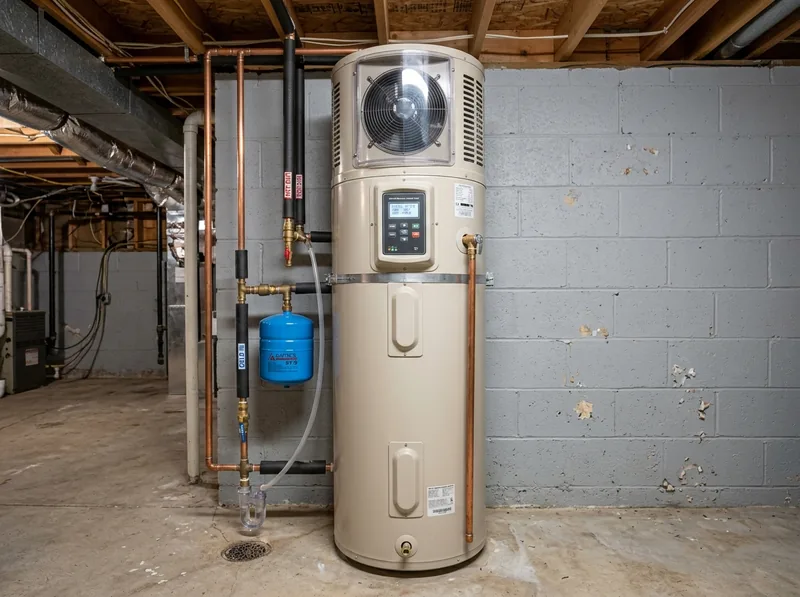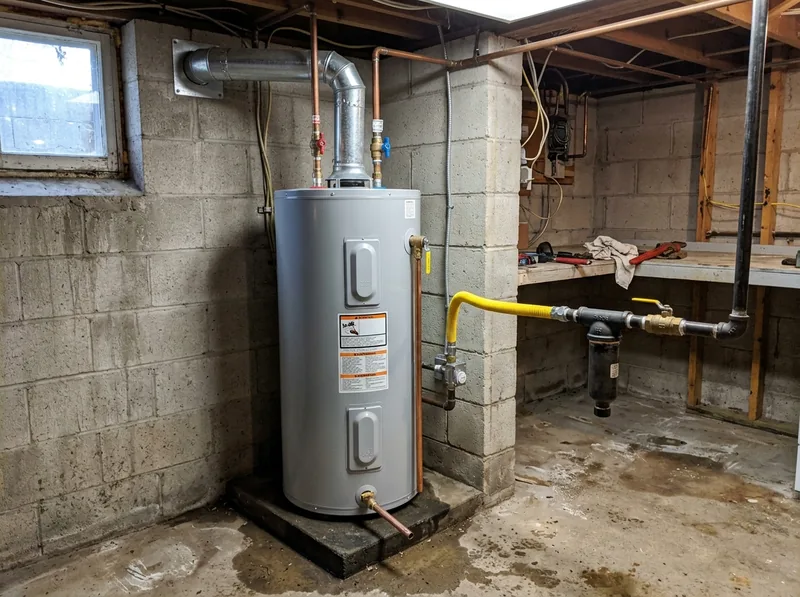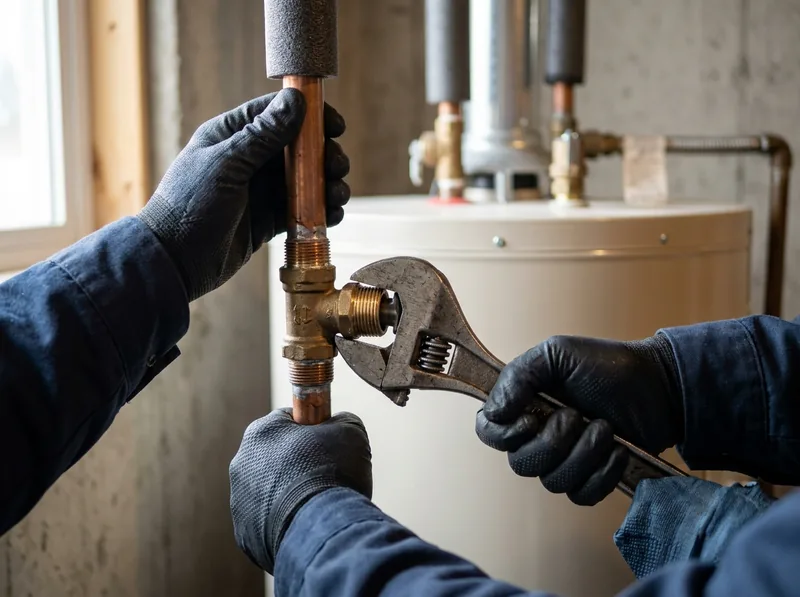
Run the cold water and then the hot. If only the hot water is rusty, the water heater is the likely source, usually a depleted anode rod or a tank that's corroding inside. If both hot and cold are discolored, the cause is the pipes or the water supply, such as iron in well water or work on a municipal main.
The two-minute test
- Run the cold water at a faucet for a minute into a white cup or bucket. Note the color.
- Do the same with hot water.
- Try another faucet on a different floor if you can.
| Result | Most likely source |
|---|---|
| Only hot water is rusty | The water heater: depleted anode rod, internal tank corrosion or sediment |
| Hot and cold are both discolored | Water supply (well iron or manganese, utility main work) or old galvanized pipes |
| Only one faucet | The pipes feeding that fixture |
| Brown at first, then clears | Sediment stirred up, or water sitting in old pipes |
When the water heater is the cause
A tank stays rust-free because the anode rod corrodes in its place. Once the anode is used up, the steel tank starts to corrode, and the first sign is often rust-colored hot water. The Portland Water Bureau lists rust-colored water as a sign that the sacrificial anode may have stopped working, or that hot water pipes are corroding. Brown or greenish tints can also come from sediment that needs flushing.
What to do:
- Drain a few gallons from the tank's drain valve into a bucket. Heavy rust-colored sediment points to the tank.
- Check the anode rod. If it's eaten down to the core wire and the tank is still sound, replacing it can extend the tank's life.
- Look at the age and the base. A tank over 10 years old with rusty water and any moisture underneath is near the end. Plan for water heater replacement before it leaks.
When the pipes or water supply are the cause
Many older Connecticut homes still have galvanized steel water pipes, which rust from the inside and can tint both hot and cold water. Homes on private wells, which serve about 23% of residents according to the Connecticut Department of Public Health, may have naturally high iron or manganese. That causes brown or orange water and stains. The DPH recommends testing well water at a state-approved lab, and treatment is based on the results.
If you're on city water and discoloration appears suddenly in both hot and cold, check with your water utility. Main breaks and hydrant flushing can stir up sediment temporarily.
Rust and a smell together?
If the hot water is discolored and smells like sulfur, read our guide on why hot water smells like rotten eggs. An anode change may fix both problems at once.
When to call a pro
Call if rusty hot water continues after a flush, if you see moisture under the tank or if you're unsure whether the tank is safe to keep. Rust plus a leak means the tank needs replacing. See water heater leak repair. One call connects you with a local provider through our water heater repair service across Connecticut.
Common questions
Is rusty hot water safe to use?
Rust in water is mainly a nuisance that stains fixtures and laundry, but it's a warning sign for your water heater. Have the cause identified, and test well water if both hot and cold are affected.
Can a new anode rod fix rusty hot water?
If the tank itself is still sound, yes, it can stop further corrosion. If the tank has already rusted through, replacement is needed.