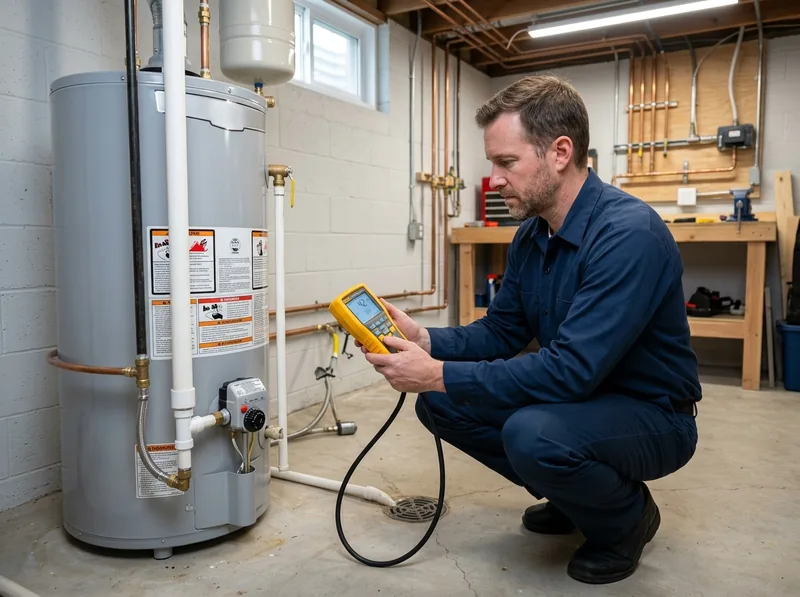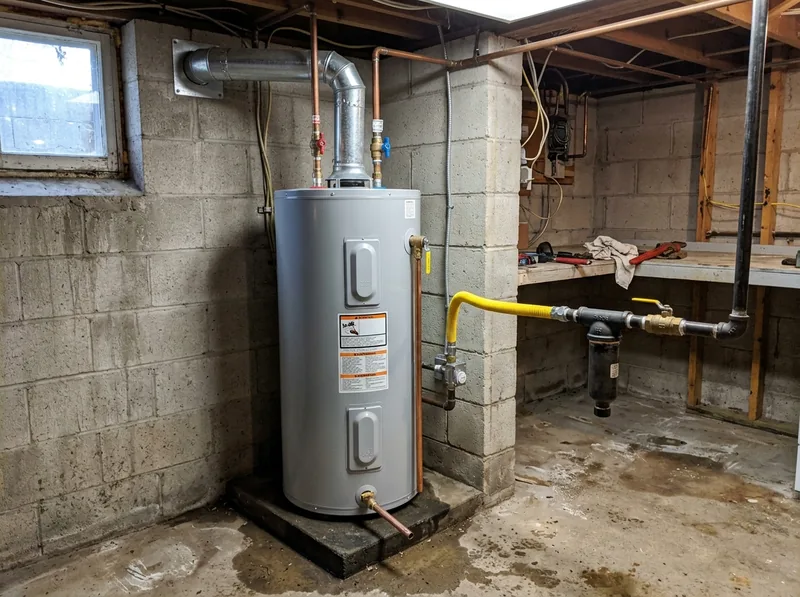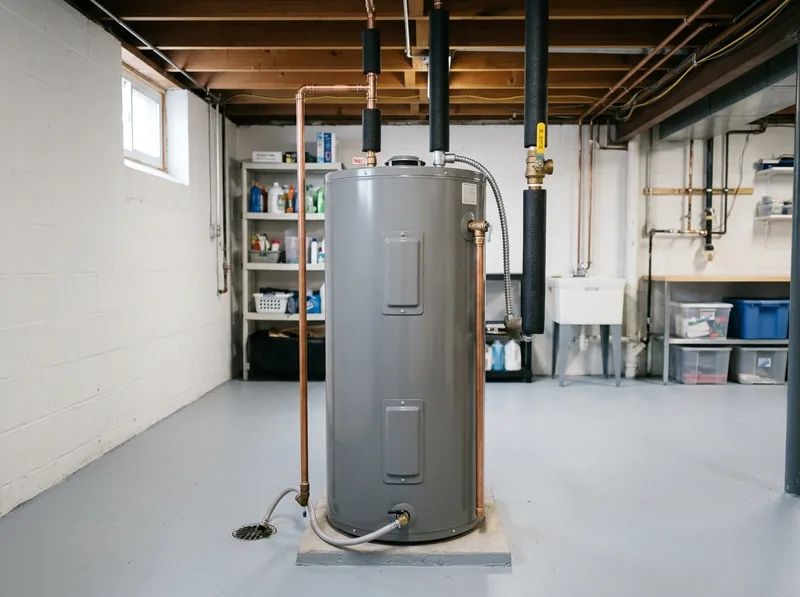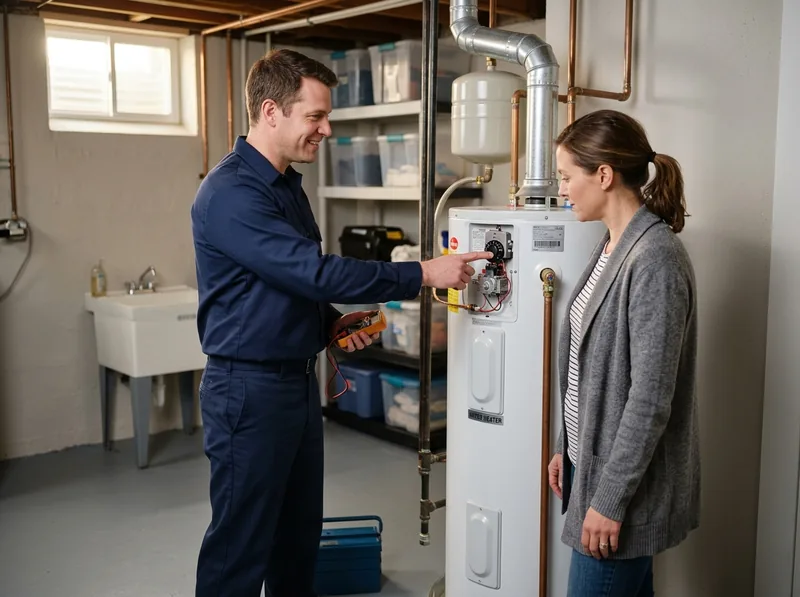
If only the hot water smells, the cause is almost always inside the water heater. Sulfates in the water react with the tank's magnesium anode rod and produce hydrogen sulfide gas, which smells like rotten eggs. The usual fix is to replace the magnesium anode with an aluminum or powered anode. If the cold water smells too, the problem is in the water supply, so test your well.
First, smell the hot and cold water separately
Run cold water from a faucet for a minute and smell it. Then do the same with hot water. The answer points you in the right direction:
- Only the hot water smells: the reaction is happening inside the water heater. This is the most common case.
- Both hot and cold smell: hydrogen sulfide is in the water supply itself, usually a well. Have the water tested.
- Only one faucet smells: the drain may be the source, not the water. Smell the water in a glass away from the sink.
What's actually causing the smell?
Every tank water heater has an anode rod, a metal rod that corrodes on purpose so the steel tank doesn't. Many anodes are made of magnesium. North Dakota State University Extension explains that a rotten-egg odor only at the hot tap indicates sulfates in the water reacting with the magnesium anode to produce hydrogen sulfide gas. Bacteria that live harmlessly in some water supplies drive that reaction, and the warm tank gives them ideal conditions.
A few things make it more likely:
- Well water with sulfates or sulfur-related bacteria
- A water softener, which can speed up the anode's reaction
- A water heater left unused for a while, such as at a vacation home or after a trip
- A tank kept at a lower temperature
Why it's common in Connecticut
An estimated 23% of Connecticut residents rely on private wells, according to the state Department of Public Health. Rural and semi-rural towns such as Redding, Tolland, Guilford and Woodstock have many homes on wells, and that's where sulfur smells in hot water show up most. The DPH also urges well owners to test their water through a state-approved lab, which is a smart first step if both hot and cold water smell.
How to get rid of the smell
| Fix | How it helps | Notes |
|---|---|---|
| Swap to an aluminum (or aluminum/zinc) anode | Changes the reaction that produces the gas | The most common fix. NDSU Extension recommends an aluminum anode. |
| Powered (impressed-current) anode | Protects the tank electrically without a sacrificial metal rod | Costs more but lasts a long time and typically ends the odor |
| Disinfect the tank | Kills the bacteria in the tank | Done by a pro; the odor can return without an anode change |
| Treat the well water | Removes sulfates or bacteria at the source | Needed if cold water smells too; base it on a water test |
Don't just pull the anode out. Removing it can stop the smell, but the anode is what protects the tank from rusting through. Running without one can shorten the tank's life and may void the manufacturer's warranty. Swap it for a different type instead.
Can I change the anode rod myself?
It's possible, but often harder than it looks. Anodes are usually very tight, may need a large socket and a breaker bar, and some tanks don't have enough ceiling clearance for a rigid rod, so you'd need a flexible, segmented one. You also have to shut off the water and power or gas and partially drain the tank. Most homeowners have a pro do it, often along with a tank flush.
When to call a pro
Call if the smell persists after an anode change, if the water heater is also producing rusty water, or if you're not comfortable working on the tank. Providers we connect you with handle anode replacement on gas and electric water heaters statewide, and our main page explains how our Connecticut water heater repair service works.
Common questions
Is rotten egg smelling hot water safe?
At the low levels typical in a water heater, it's mainly an odor nuisance. If the cold water smells too, test your well to confirm what's in it.
How often should an anode rod be replaced?
It varies with water quality. Many pros suggest checking it every few years, and more often with softened or well water.